The federal hemp deadline moved to December 11. Illinois and New Jersey did not move with it.
Illinois's new Hemp Act still takes effect November 12 and New Jersey still ends liquor-store THC drink sales on November 13 - state dates the federal stopgap never touched.
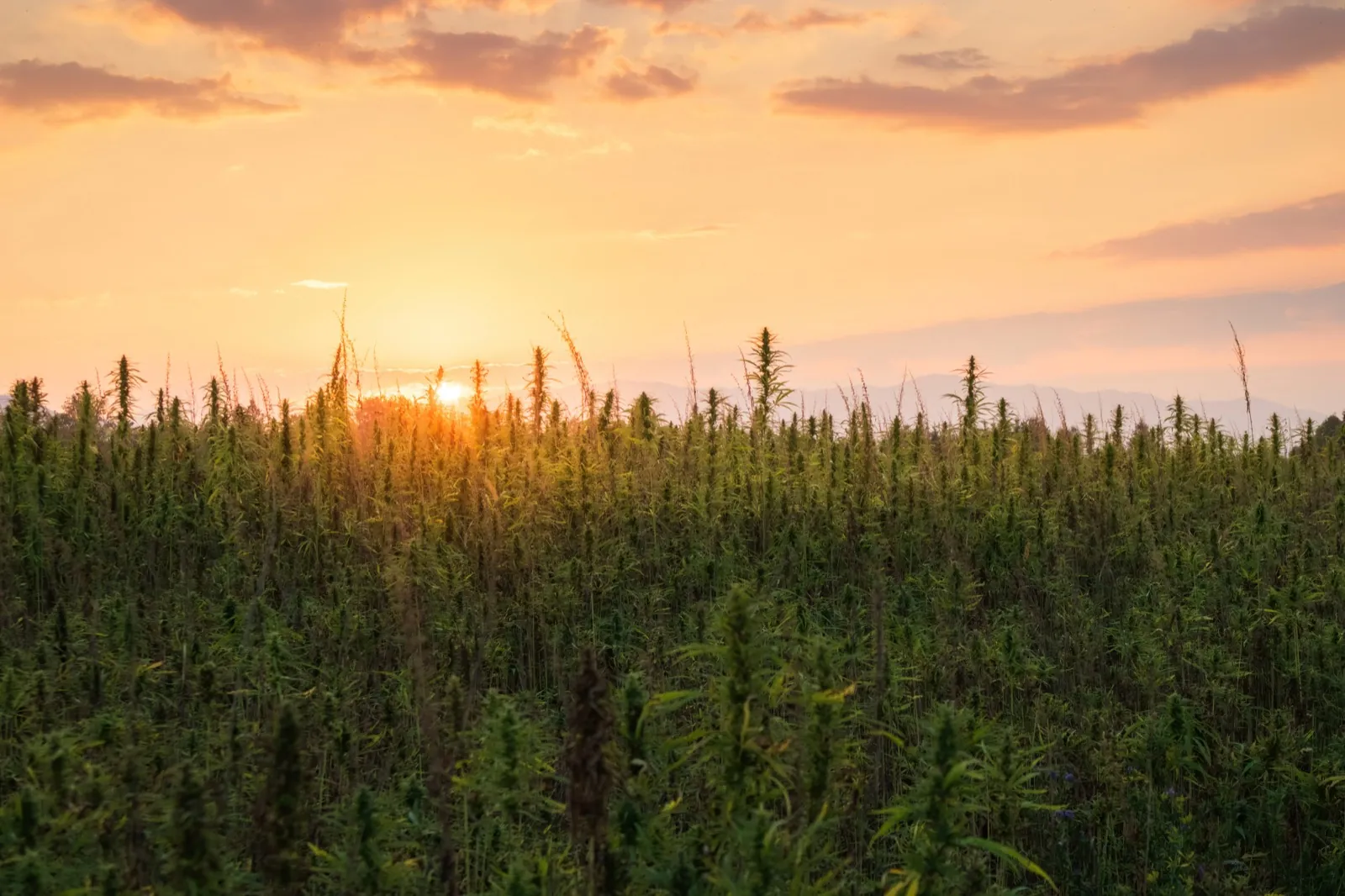
Industrial hemp crop at sunset.
When Congress pushed most of the federal hemp restrictions to December 11, it moved a federal date. It did not move the state dates that had been written to match the old one. Two of them are now the earliest hard deadlines on the calendar for a large share of the industry: November 12 in Illinois and November 13 in New Jersey.
Both were flagged in a September 15 analysis from the law firm Foley Hoag, and reporting published September 17 by Harvest Public Media shows what the Illinois date looks like from inside a business that has to meet it.
Illinois wrote the federal definition into state law - with the original date
Governor JB Pritzker signed Public Act 104-463 (SB 3222) on June 12, 2026. It repeals the state’s Industrial Hemp Act and replaces it with a new Illinois Hemp Act on November 12, 2026. The Illinois Department of Agriculture’s June bulletin on the law describes the new state definition of hemp as one that “follows the new federal definition,” and says the Act adopts the federal definition “that is set to take effect on November 12.”
That sentence was accurate in June. On September 2 the federal date for most of those provisions became December 11. The Illinois date did not change, because it sits in an Illinois statute, not in the federal one. As of this writing we have not seen any move in Springfield to change it.
The state definition tracks the federal language closely. Starting November 12, a final hemp-derived cannabinoid product is not hemp in Illinois if it contains:
- cannabinoids that cannot be naturally produced by the cannabis plant;
- cannabinoids that can be naturally produced by the plant but were synthesized or manufactured outside it; or
- more than 0.4 milligrams combined total per container of total THC - including THCA - and any other cannabinoids that have, or are marketed to have, similar effects. The Act’s own list of those includes delta-8 THC, THC-P, HHC, and THC-O.
On top of the definition, the Act sets product rules for anything that does qualify. Final consumer hemp cannabinoid products cannot contain alcohol, tobacco, or nicotine, cannot be intended for smoking or vaping, must be prepackaged, must be tested by a Department-approved laboratory, must carry a QR code linking to the certificate of analysis, and must be sold in sealed, child-resistant containers.
The Department's bulletin is direct about the consequence: products that do not meet the definition of hemp "are considered 'cannabis' and may be subject to penalties for the unlicensed sale of cannabis." Under the Illinois Cannabis Control Act those penalties range, depending on amount, from a Class B misdemeanor to a Class X felony and fines of up to $200,000. Separately, products that do meet the hemp definition but miss the Act's product requirements can draw civil penalties and are an unlawful practice under the state's Consumer Fraud and Deceptive Practices Act.
Two pieces of the law did not wait for November. Since signing, any cannabinoid product over 0.4 mg of THC or similar-effect cannabinoids can only be sold to customers 21 and over - with age verification for anyone who appears under 30 - and all hemp products must already meet the state’s new labeling rules.
The licensing changes on the same day
Existing industrial hemp processor registrations terminate when the old Act is repealed on November 12; the Department says registrants can request a prorated refund. After that date there are two paths. Anyone processing raw industrial hemp for non-cannabinoid products needs an industrial hemp processor license - two years, $200, and no cannabinoid products allowed. Anyone who processes or handles hemp or intermediate hemp-derived cannabinoid products needs the new Hemp Product Manufacturer license: facility-specific, valid two years, a $5,000 fee, local zoning verification, a pre-licensure inspection, and operation under a state-certified food service sanitation manager. The Act expressly prohibits creating artificially derived cannabinoids.
Cultivation is the quiet part. Existing cultivation licenses transfer to the new Act, renewal cycles stay the same, and the Department says it expects “little immediate impact” on Illinois hemp farmers.
What that looks like from one Illinois business
Stacy McCaskill has grown hemp since 2019 and owns Hempstock Pharms in Woodstock, Illinois, which sells more than 150 hemp products. She told Harvest Public Media’s Skyler Rossi that the products that would fit the new rules make up less than 10% of her business. “We’re really busy right now trying to figure out our end of game,” she said. She is testing a hemp-leaf juice that would meet the new standard and a line of mushroom gummies, and is looking at Illinois’s updated license program - though, as the story puts it, it costs thousands of dollars and she is not certain there will be a market for the products.
The same piece carries the industry’s headline numbers, from U.S. Hemp Roundtable general counsel Jonathan Miller: “We’re talking about a $23 billion industry with about half a million jobs,” of which he says “95% of that would be wiped out.” Those are an advocacy group’s figures and should be read as such. McCaskill’s 10% is one shop’s inventory, not a survey. But it is the same order of magnitude from the other direction, and it is the more useful number for anyone trying to picture an Illinois shelf on November 12.
New Jersey’s date is about where THC drinks can be sold
New Jersey’s deadline is narrower and a day later. According to the state Cannabis Regulatory Commission, the state’s hemp law took effect January 13, 2026, and its new hemp definitions - including the 0.4 mg total-THC per-container line - applied from April 13. Beverages got a transition window: since May 31, intoxicating hemp beverages have been capped at 5 mg of total THC per serving and 10 mg per container, and may be sold by holders of plenary wholesale or retail licenses from the Division of Alcoholic Beverage Control and by licensed Class 5 cannabis retailers.
That window closes November 13. After it, beverages over the hemp threshold can be sold only through the licensed cannabis system. The Commission’s guidance also notes that online sales and vending-machine sales of hemp products are already prohibited.
For the beverage category we described as the most exposed to the per-container cap, New Jersey is the first place the liquor-store channel actually shuts - four weeks before the federal cap arrives.
Why this matters even if you are not in either state
The federal delay was sold as thirty more days. For a multistate brand it is thirty more days only in the states that have no earlier date of their own. We made the general point in how to read your state’s hemp rules - federal law sets a floor, not a ceiling - and the Tennessee and Texas examples showed states moving ahead of Congress. Illinois and New Jersey are a different version of the same problem: states that deliberately synchronized with the federal date, and are now out of sync because only one side of the pair moved.
It also cuts the other way. If Congress replaces the December 11 restrictions with a regulatory framework, a state statute that has already written the 0.4 mg definition into its own code does not update itself. A federal fix would reopen the question in Illinois; it would not answer it.
What to watch
On timing, the September 17 reporting is not encouraging for anyone hoping for an early fix. Cynthia Cabrera of the Texas Hemp Business Council said most lawmakers are focused on the elections and that there is unlikely to be movement until November. Miller’s hope is that a different hemp framework gets added to the government spending bill due in December. That sequence puts any federal action after November 12 and 13 - which means Illinois and New Jersey businesses should plan on their state dates arriving first, whatever Congress does next.
The other thing to watch is whether either state acts on its own. A legislature can move a date it set. Until one does, the calendar for these two markets reads November, not December.
Common questions
- Did the federal delay to December 11 also delay Illinois's hemp law?
- No. The Illinois Hemp Act (Public Act 104-463, SB 3222) takes effect November 12, 2026 under state law. The federal stopgap signed September 2 moved most of the federal restrictions to December 11, but it does not change a date set in Illinois statute, so the 0.4 mg total-THC per-container limit applies in Illinois about a month before it applies federally.
- Can CBD products still be sold in Illinois after November 12, 2026?
- Yes, if they meet the new definition of hemp - no more than 0.4 milligrams of total THC (including THCA and cannabinoids with similar effects) per container, with no synthetic or converted cannabinoids - and meet the Act's testing, labeling, and child-resistant packaging requirements. Products intended for smoking or vaping, or containing alcohol, tobacco, or nicotine, are not allowed. Products over the limit are treated as cannabis under state law.
- When do hemp THC drinks leave New Jersey liquor stores?
- November 13, 2026. According to the New Jersey Cannabis Regulatory Commission, until that date holders of plenary wholesale or retail licenses from the Division of Alcoholic Beverage Control and licensed Class 5 cannabis retailers may sell intoxicating hemp beverages capped at 5 mg of total THC per serving and 10 mg per container. After it, beverages over the hemp threshold can be sold only through the licensed cannabis system.
Editorial content only. This article is reporting and analysis, not medical, legal, or investment advice. Hemp and CBD regulations differ by state and change frequently. Verify current rules in your jurisdiction before making decisions.