The planting decision hemp farmers have to make before the rules change
Cannabinoid acreage and fiber-and-grain acreage are about to sit under different federal regimes. The agronomy is similar; the compliance exposure is not.
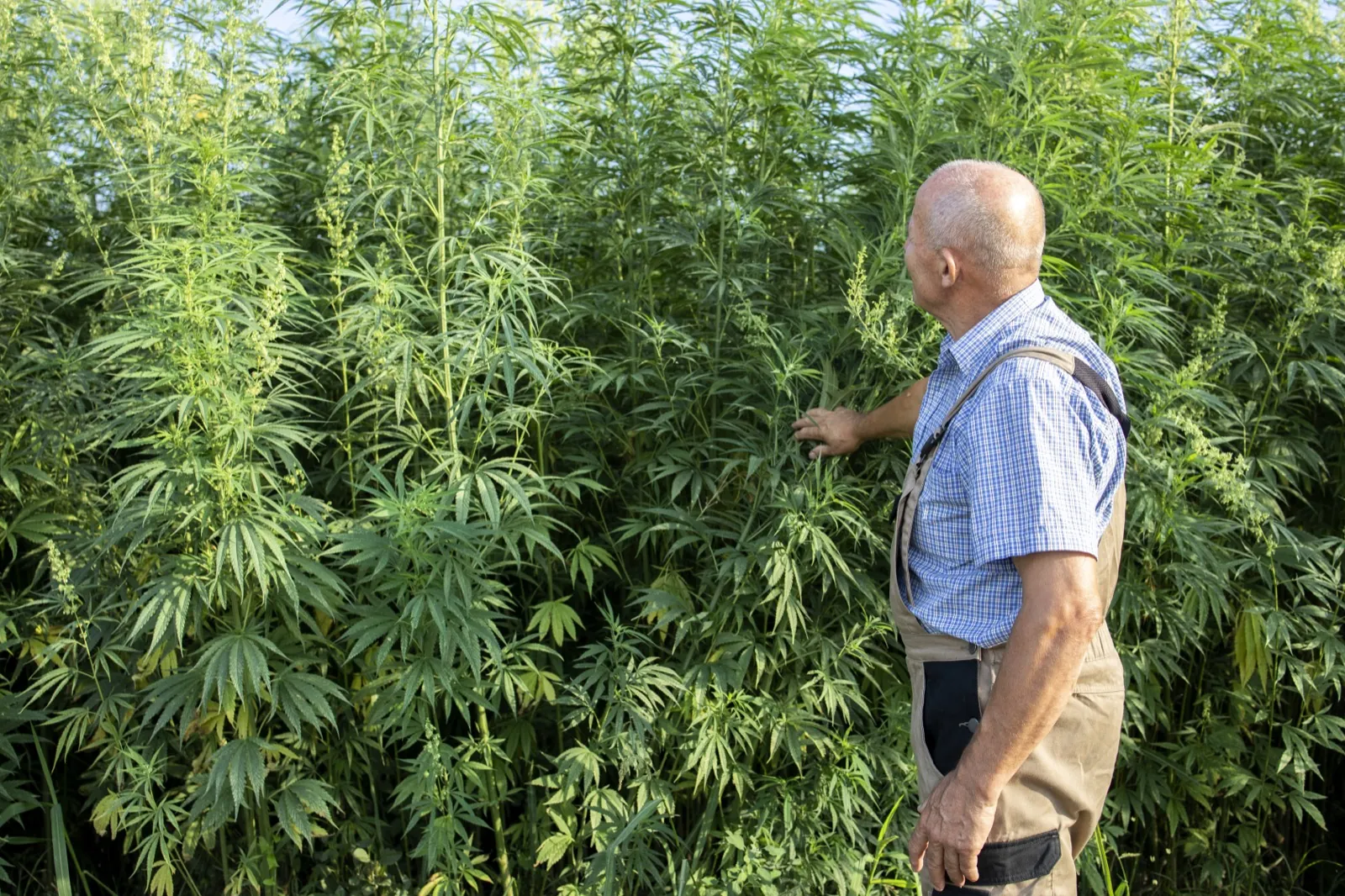
An agronomist inspecting hemp plants in a field.
The November definitional change is usually discussed as a product problem - reformulate the gummy, resize the bottle. Upstream, it is a crop selection problem, and crop selection decisions are made a season ahead of the deadline they answer to.
Two hemp industries, one word
“Hemp” covers two businesses that share a plant and almost nothing else commercially:
- Fiber and grain. Sold by the ton into textiles, hurd, building materials, animal bedding, seed and oil. Priced like a commodity crop. Cannabinoid content is agronomically irrelevant.
- Cannabinoids. Sold by the kilogram of extract into consumer products. Priced on potency and purity. Cannabinoid content is the entire product.
The 2018 Farm Bill defined both with one THC threshold. The provisions taking effect in November tighten the definition and add finished-product limits aimed squarely at the second business. The first is largely untouched.
What changes for the grower
Under the new total-THC standard, compliance testing counts THCA alongside delta-9. For growers, that removes the practical margin that some cannabinoid cultivars were operating inside. A crop that historically tested compliant on delta-9 alone can fail on total THC without anything about the farming changing.
That has three consequences worth pricing now:
- Cultivar risk moves earlier. Genetics chosen for cannabinoid yield need to be re-evaluated against a total-THC ceiling, not a delta-9 one. This is a seed-purchasing decision, not a harvest decision.
- Hot-crop exposure rises. A non-compliant crop is a destruction event, not a discount. The wider the gap between your expected total THC and the ceiling, the more weather and harvest timing can cost you.
- The buyer’s problem becomes your problem. If processors and brands cannot sell finished cannabinoid products at volume after November, extract demand contracts regardless of whether your specific crop is compliant.
Fiber and grain markets are thinner and lower-margin, but they are not exposed to the cannabinoid provisions at all. Cannabinoid markets carry the higher price per acre and now carry a regulatory cliff with a date on it.
Questions to put to your buyer in writing
Contract structure matters more than usual this season. Before committing acreage to cannabinoid production, get answers on paper:
- Which THC standard does the contract’s compliance clause reference - delta-9 or total?
- Who bears the loss if the crop is compliant at harvest under the current definition but the delivery window falls after November 12?
- Is there a stated minimum offtake, or is the buyer’s obligation contingent on their own ability to sell finished product?
- Does force majeure language treat a regulatory change as a triggering event, and if so, in whose favor?
What we do not know yet
The statute sets thresholds. It does not, on its own, resolve how total THC is to be measured in the field versus in a finished good, which laboratory methods will be accepted, or how in-ground and in-warehouse inventory is treated on the effective date. Agencies have issued guidance on narrower questions before and may again - but planting decisions cannot wait for it.
That is the uncomfortable shape of this season: the deadline is fixed, the implementation detail is not, and the crop goes in the ground either way.
Editorial content only. This article is reporting and analysis, not medical, legal, or investment advice. Hemp and CBD regulations differ by state and change frequently. Verify current rules in your jurisdiction before making decisions.