Hemp's federal definition changes on November 12
Section 781 moves hemp to a total-THC standard and caps finished products at 0.4 mg per container. Most cannabinoid products on shelves today do not survive it.
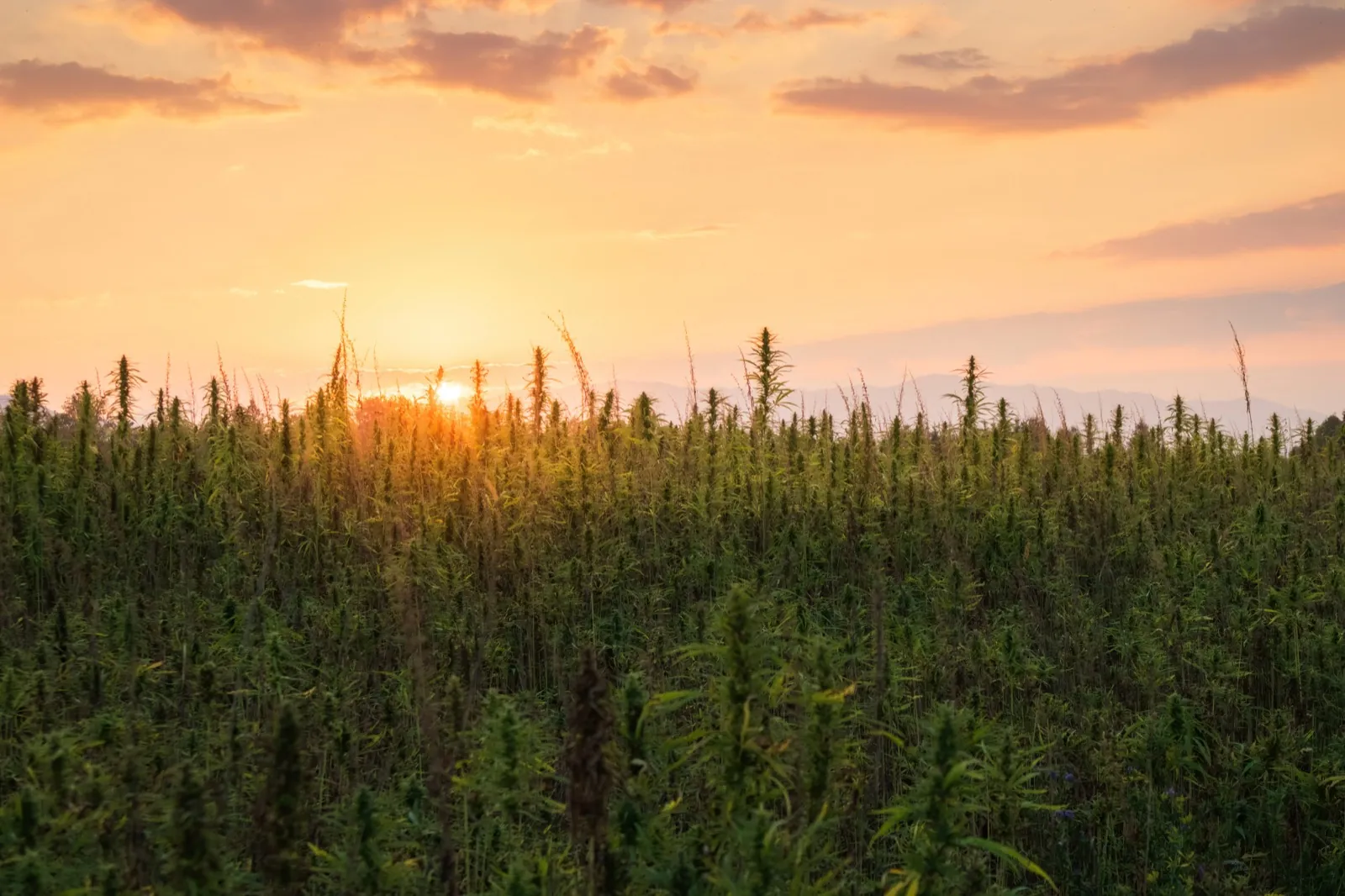
Industrial hemp crop at sunset.
The definition of hemp that the industry has operated under since 2018 expires on November 12, 2026. What replaces it is narrow enough that most hemp-derived cannabinoid products on shelves today become federally unlawful.
The change arrived inside the Continuing Appropriations, Agriculture, Legislative Branch, Military Construction and Veterans Affairs, and Extensions Act, 2026 - H.R. 5371. Section 781 amends the hemp definition in the Agricultural Marketing Act. The law took effect when it was signed, but Congress attached a one-year runway to the definitional change specifically. That runway is now about three months from closing.
What actually changes
Two shifts matter, and the second is the one that reshapes the shelf.
From delta-9 to total THC. The 2018 Farm Bill set the line at 0.3% delta-9 THC by dry weight. The new standard is 0.3% total THC, and total is defined to include THCA and delta-8 THC. THCA is the acidic precursor that converts to delta-9 when heated; counting it closes the gap that let high-THCA flower ship as compliant hemp.
A per-container cap on finished products. Final-form hemp-derived cannabinoid products are additionally capped at 0.4 mg total THC per container - not per serving, per container. This is the provision with the widest blast radius. A full-spectrum tincture sized for a 30-day supply can exceed 0.4 mg per bottle while sitting far below 0.3% by weight.
A concentration limit scales with product size; a per-container limit does not. A 30 mL bottle and a 120 mL bottle can both pass 0.3% and only one can pass 0.4 mg. Product architecture, not just extract chemistry, now determines compliance.
How much of the market is exposed
The U.S. Hemp Roundtable has estimated that roughly 95% of existing hemp-derived cannabinoid products would be rendered federally unlawful under the new standard, absent intervening legislation.
Treat that as an advocacy-group estimate of a category boundary, not a measured census - the trade association making it is also lobbying against the provision. But even a much lower figure would still describe a reordering rather than a trim. The 0.4 mg container cap does not distinguish between an intoxicating delta-8 gummy and a conventional full-spectrum CBD oil that happens to carry legal trace THC. Both are measured the same way.
What is not changing
Isolate and broad-spectrum products with non-detectable THC are the least exposed categories, because they were never relying on the trace-THC allowance. Industrial hemp grown for fiber, grain, and seed is outside the cannabinoid-product provisions entirely. And the change is federal - it does not preempt states that have already written stricter rules, several of which moved ahead of Congress.
What to watch between now and November
- Intervening legislation. The provision sits in an appropriations act, which makes it a candidate for amendment or delay in the next funding cycle. The 2026 Farm Bill process is the other vehicle.
- Agency guidance. The statute sets numbers; it does not by itself answer how “total THC” is measured in a finished product, which lab methods qualify, or how existing inventory is treated after the date.
- State divergence. Expect states that built licensing regimes around the 2018 definition to have to decide whether to track the federal change or hold their own line.
We will keep a running tracker on this. If you operate in this category, the decisions that matter - reformulation, container sizing, inventory sell-through - have lead times longer than the runway that remains.
Editorial content only. This article is reporting and analysis, not medical, legal, or investment advice. Hemp and CBD regulations differ by state and change frequently. Verify current rules in your jurisdiction before making decisions.