Why hemp-derived THC drinks are the category most exposed to the December cap
THC beverage sales grew 135% year over year to $239 million, and Circle K and Target are expanding shelf space for them - the same format the 0.4 mg per-container standard hits hardest.
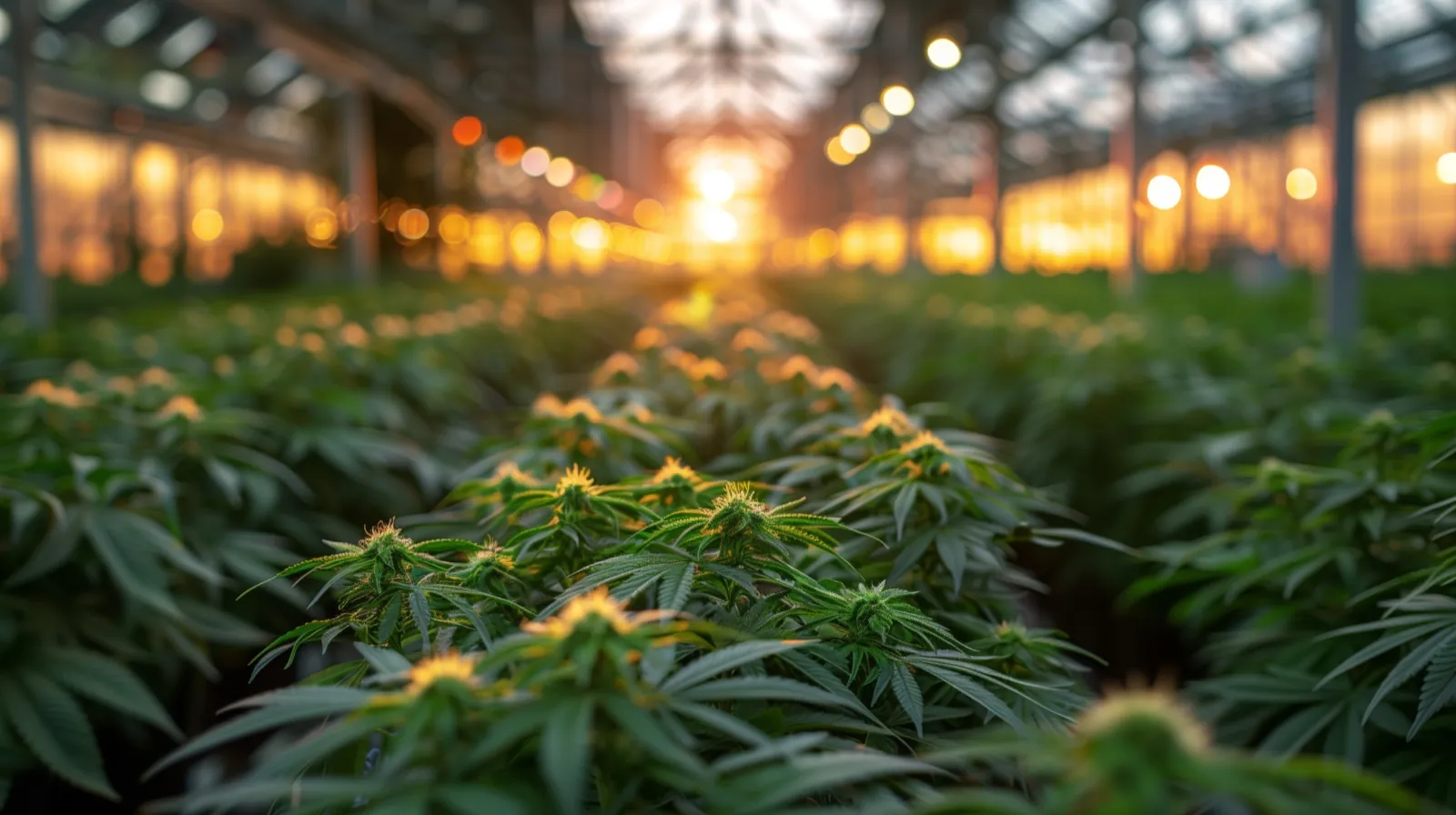
An automated greenhouse growing hemp under evening light.
Hemp-derived THC beverages are the fastest-growing category in the hemp industry, and the product format the incoming per-container THC cap was almost precision-built to shrink. Most cans on shelf today carry many times the 0.4 mg total-THC limit that takes effect December 11.
How big the category actually is
THC drinks generated $239 million in sales over the trailing 52 weeks, up 135% year over year, according to a NielsenIQ report from April 2026 - a growth rate nothing in beer, wine, or spirits is close to matching. Liquor stores account for the larger share at $132 million, but convenience stores, at $55 million, are growing faster: GPM Investments reportedly doubled sales after adding dedicated coolers in April.
Retail expansion is accelerating on top of that. Circle K has announced plans to roll hemp-derived THC beverages into up to 3,000 stores nationwide in 2026, partnering with Horticulture Co. on a line dosed at 10 mg of THC per can. Target has expanded sales into more than 300 stores across Illinois, Florida, and Texas.
Market sizing varies by scope, and the distinction matters: analyst firm Zenith puts the hemp-derived THC drinks market specifically at $1.1 billion, while broader cannabis-beverage market estimates - which include state-licensed marijuana products, not just hemp-derived ones - run higher and grow on a different timeline. Conflating the two overstates how much of that growth is actually exposed to federal hemp law.
Doing the math on the cap
This is the number that matters for the category’s survival in its current form: a can dosed at 10 mg of total THC - Circle K’s own stated formulation - sits at roughly 25 times the 0.4 mg per-container limit taking effect December 11. Even a modest 2 mg-per-serving can with two servings lands at 10 times the cap.
That is a structurally different problem than the one facing a CBD tincture. A full-spectrum oil bottle carries trace THC as an incidental byproduct of extraction - the four reformulation levers we outlined earlier (shrink the container, reduce trace THC, reformulate to isolate, exit the format) all remain available because THC was never the point of the product. A THC beverage’s entire value proposition is the THC dose itself. Cutting content by more than 95% to clear the cap does not produce a smaller version of the same product - it produces a functionally different, non-intoxicating one.
"Hemp beverage" covers both intoxicating THC drinks, dosed specifically to produce an effect, and non-intoxicating hemp or CBD beverages formulated to keep total THC near zero. The growth numbers and the regulatory exposure above belong to the first category. The second is among the least exposed formats under the new standard - grouping them together overstates the risk to one and understates it for the other.
Big beverage already tested this water
Molson Coors has been here before. Through its Truss CBD USA joint venture with Hexo, the company launched Veryvell, a hemp-CBD sparkling beverage line, and later expanded the venture. Molson Coors subsequently cited uncertainty over federal cannabis law as a reason for exiting its US CBD beverage business. The industry’s best-capitalized player already walked away once over exactly this kind of regulatory uncertainty - worth weighing against how confidently the current beverage rollout numbers get repeated.
What to watch
Whether any beverage-specific exception, longer runway, or reformulation standard attaches to whatever legislation follows the current stopgap. We are tracking the federal timeline itself here; for beverages specifically, the question that matters most is whether Congress or FDA guidance treats a 12-ounce can differently from a 30-milliliter tincture bottle, given how differently the math works out for each.
Common questions
- Will hemp-derived THC drinks be illegal after December 11, 2026?
- Products carrying more than 0.4 mg of total THC per container will not meet the revised federal hemp definition once Section 781's standard takes effect December 11 - and most THC beverages on shelf today, formulated with several milligrams of THC per can, are well over that line.
- How much THC is actually in a hemp seltzer?
- Formulations vary, but widely distributed products like the Circle K and Horticulture Co. line are dosed around 10 mg of THC per can - roughly 25 times the 0.4 mg per-container limit that applies in December.
- Is CBD-only beverage exposed to the same deadline?
- Not in the same way. Non-intoxicating hemp beverages formulated to keep total THC near zero are the least exposed category under the new standard; the risk concentrates in beverages where THC dosing is the entire selling point.
Editorial content only. This article is reporting and analysis, not medical, legal, or investment advice. Hemp and CBD regulations differ by state and change frequently. Verify current rules in your jurisdiction before making decisions.