The hemp market is already trading a deadline Congress hasn't settled
Wholesale isolate prices, a public company's Q2 numbers, and where new capital is landing all point the same direction, even before any bill reached the President's desk.
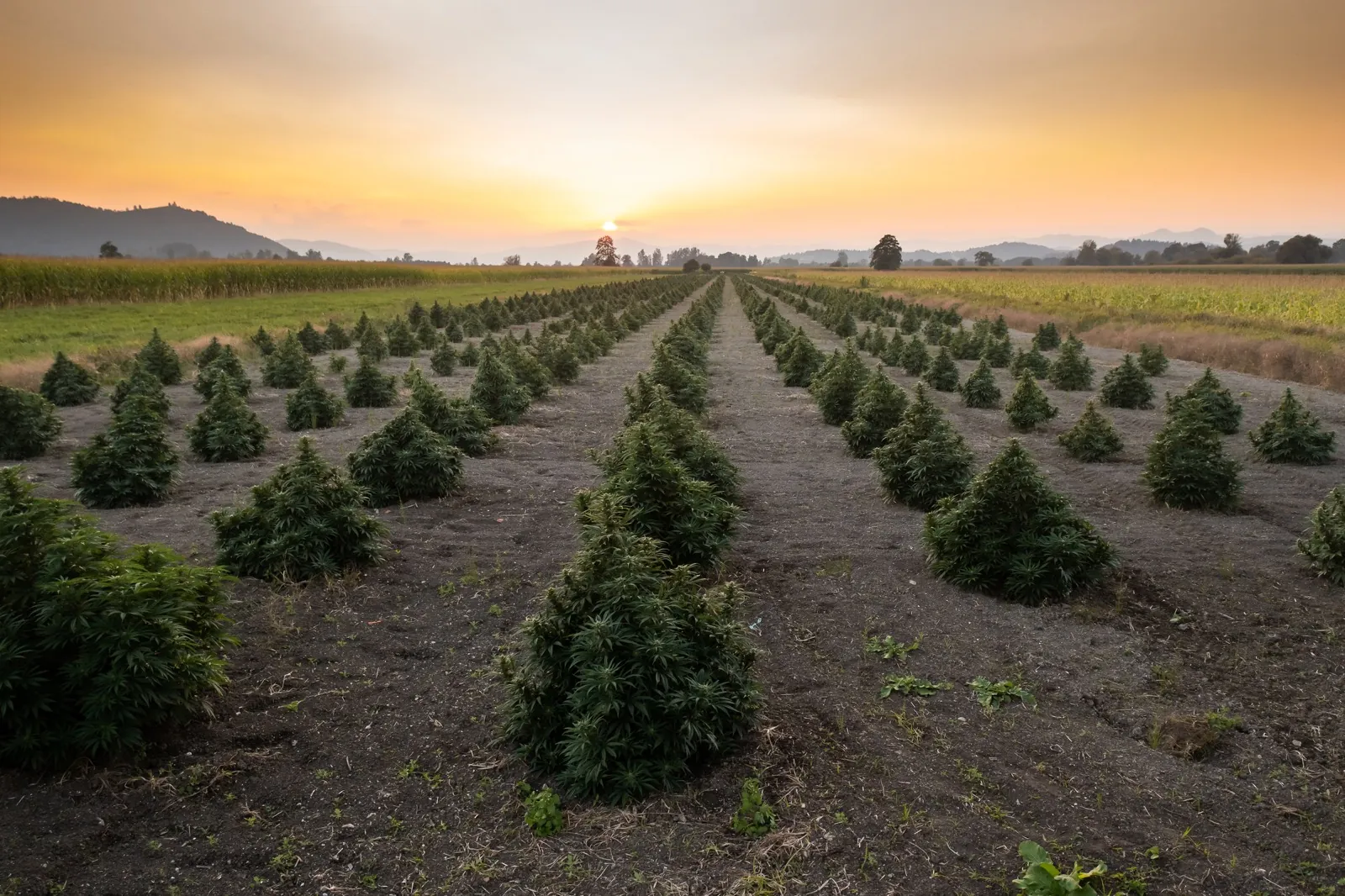
Aerial view of large hemp fields.
Congress has not finished deciding what happens on November 12. The wholesale market and at least one public company’s balance sheet have not waited to find out.
Isolate is selling off first
Hemp Benchmarks’ August spot price index shows CBD isolate down more than 11% per kilogram month over month, with THCa, CBC, and CBN isolates each shedding more than 7% - a sharper move than the broader biomass categories, which the index attributes to demand pulling back “in anticipation of regulatory caps.”
That is not a random corner of the market to sell off first. As we wrote when the per-container cap piece of Section 781 first came into focus, a concentration limit is scale-invariant but a per-container milligram cap is not - and concentrated cannabinoid inventory is exactly what a container cap is built to catch. Isolate and near-isolate cannabinoid stock is the highest-exposure asset a processor or brand can be holding into a deadline, so it is the first thing that gets sold down rather than warehoused through it.
The complicating detail: this repricing happened while the deadline itself was still in motion. The Senate voted 90-6 on August 8 to attach a delay - pushing the new restrictions from November 12 toward December - to its government funding package. That vote is not law. The House has not yet acted, and the government funding deadline it is racing is September 30. The market moved on the cap before Congress moved on the date.
One public company’s numbers point the same way
Charlotte’s Web’s second-quarter results, filed with the SEC, show revenue of $10.9 million, down 15% from $12.8 million a year earlier. The company attributes the decline to a retail-channel restructuring it began in September 2025 - before the current deadline fight was even the loudest story in the category - and says it is redirecting resources toward its online, healthcare-practitioner, and diversified botanical channels.
The margin line tells a more interesting story than the revenue line. Gross margin expanded to 47.5% of revenue from 46.8% a year earlier, and the net loss narrowed to $4.1 million from $6.3 million, even as sales fell. That is the shape of a company deliberately shrinking its highest-exposure consumer retail volume while protecting what is left - the same tradeoff, made with real dollars instead of a hypothetical, that we described across the four reformulation levers in the piece linked above.
One company’s 10-Q is not the category. But wholesale pricing and one filer’s numbers are pointing in the same direction at the same time, which is a stronger signal than either alone.
A double-digit drop in isolate pricing reads, at a glance, like a demand story. It is closer to an inventory story: holders selling down exposed stock ahead of a compliance date rather than risk being caught holding it. The distinction matters for anyone using spot prices to forecast where this market is a year from now.
Where the growth capital is actually landing
Three items from the last several weeks share a pattern: capital moving toward hemp lanes that sit outside the U.S. cannabinoid-product fight entirely.
- The EU eased administrative requirements for hemp cultivators under Commission Regulation (EU) 2026/177, giving member states more flexibility on compliance-audit timing and testing cadence. Separately, EU lawmakers have proposed extending Common Agricultural Policy subsidy treatment to CBD-rich hemp flower under a “whole plant” approach - still a proposal, not adopted law.
- Australia’s New South Wales government committed A$2 million (roughly US$1.4 million) to expand large-scale hemp processing and manufacturing capacity - industrial and fiber infrastructure, the same lower-exposure business we distinguished from cannabinoid production in our look at the planting decision facing hemp farmers.
- India’s drug regulator, CDSCO, approved Leiutis Pharmaceuticals’ fully synthetic CBD oral solution for mild-to-moderate anxiety disorders, prescription-only and intended for use alongside cognitive behavioral therapy, following a Phase III trial published in the Asian Journal of Psychiatry. It is a pharmaceutical approval, not a consumer hemp product - and that is precisely why it sits untouched by anything happening in Section 781.
None of this is capital leaving cannabinoids. It is capital leaving the one lane - U.S. consumer hemp-derived product - where a per-container cap bites hardest, for lanes where it does not apply at all.
What to watch
The House has until September 30 to act on the Senate’s proposed delay, or the November 12 date holds as written. Whether that vote happens, and whether it changes anything about the container-cap mechanics rather than just the calendar, is the next thing worth tracking here.
Editorial content only. This article is reporting and analysis, not medical, legal, or investment advice. Hemp and CBD regulations differ by state and change frequently. Verify current rules in your jurisdiction before making decisions.